
Table of Contents
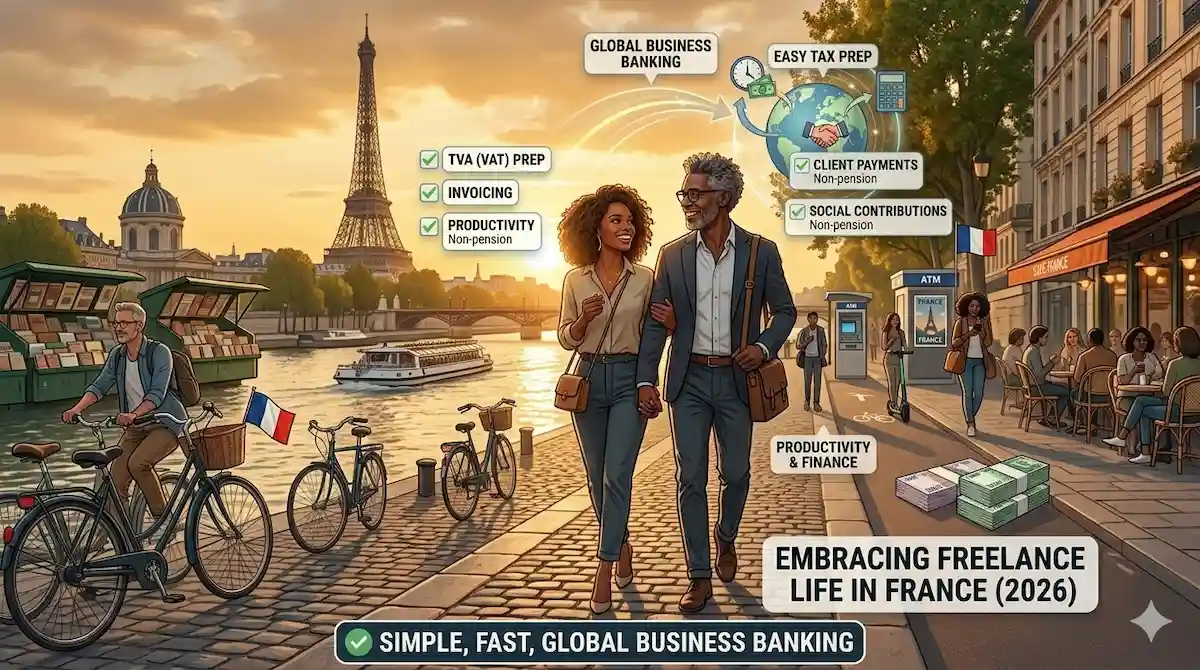
A realistic glimpse of expat life in France—culture, lifestyle, and everyday living combined.
Introduction: What It’s Really Like to Live in France as an Expat
Moving to France is a dream for millions of people around the world. The country is famous for its culture, cuisine, historic cities, and a lifestyle that prioritizes quality of life. Whether it’s the cafés of Paris, the vineyards of Bordeaux, or the sunny streets of Toulouse, France offers a unique environment that attracts professionals, students, entrepreneurs, and families from across the globe.
However, the reality of relocating to France involves much more than enjoying croissants and picturesque streets. Expats quickly discover that French bureaucracy, paperwork, and administrative systems can feel complex—especially during the first months after arrival.
From finding an apartment and opening a bank account to registering for healthcare and understanding transportation systems, there are many practical steps required to settle successfully.
After living in France for several years, I’ve experienced both the exciting and challenging sides of expat life. Some days are magical—like walking along the Seine at sunset or enjoying a long dinner with friends at a neighborhood restaurant. Other days involve navigating long queues at the prefecture or trying to understand official letters written entirely in administrative French.
The key to a smooth transition is preparation. Understanding how the French systems work before arriving can save a significant amount of time, stress, and money.
By the end of this guide, you will understand:
- How to choose the best city in France
- How to find housing and prepare a rental dossier
- How the French healthcare system works
- How to open a bank account
- What the cost of living looks like in 2026
- How to adapt to daily life and French culture
Whether you’re planning your move or have already arrived, this guide will help you avoid common mistakes and settle into life in France much faster.
Best Cities for Expat Life in France
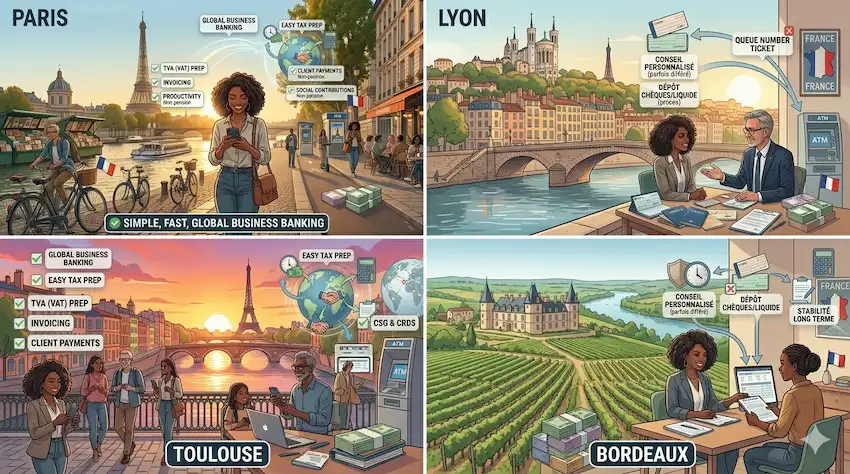
Choosing the right city is one of the most important decisions when moving to France. The country offers a wide range of lifestyles—from fast-paced international capitals to quiet countryside towns.
Your choice of city will influence several important aspects of daily life, including:
- Cost of living
- Job opportunities
- Housing availability
- Language accessibility
- Lifestyle preferences
Here are some of the most popular cities for expats in France.
Paris: The International Heart of France
Paris is the country’s economic, cultural, and political center. It attracts professionals from around the world and hosts the headquarters of many multinational companies.
For expats working in finance, technology, fashion, or international organizations, Paris often offers the most opportunities.
Advantages of living in Paris include:
- Large international community
- Strong job market
- World-class public transportation
- Cultural attractions and global cuisine
Expats often enjoy sightseeing near landmarks like the Eiffel Tower while exploring Parisian culture.
However, the biggest challenge is the cost of housing.
According to housing market data reported by INSEE, Paris remains the most expensive rental market in France.
Typical monthly rent in 2026:
- Studio apartment: €900 – €1,400
- One-bedroom apartment: €1,300 – €2,600
Despite the high prices, many expats choose Paris because of its global atmosphere and professional opportunities.
Lyon: The Perfect Balance Between Career and Lifestyle
Lyon is often considered the best alternative to Paris. Located about two hours away by high-speed train, Lyon offers many of the benefits of a major city but with a more relaxed lifestyle.
Key advantages include:
- Rent approximately 25–30% lower than Paris
- Excellent public transportation
- Strong economy with growing tech and biotech sectors
- Renowned food culture (Lyon is often called the gastronomic capital of France)
Because of its high quality of life and relatively lower costs, Lyon has become increasingly attractive for international professionals.
Toulouse: A Fast-Growing International Tech Hub
Toulouse has gained a reputation as one of France’s fastest-growing cities. It is the center of Europe’s aerospace industry and home to major companies such as Airbus.
The city attracts engineers, researchers, and international professionals working in aviation and technology.
Benefits of living in Toulouse include:
- Sunny climate
- Growing job opportunities in aerospace and tech
- Lower housing costs compared to Paris
- Friendly and youthful atmosphere
Because of its large student population and growing startup ecosystem, Toulouse offers a vibrant social environment for expats.
Bordeaux and Nantes: High Quality of Life
Bordeaux and Nantes are increasingly popular among expats looking for a balance between urban life and affordability.
Both cities have invested heavily in modern infrastructure and sustainability initiatives, including:
- Extensive cycling networks
- Modern tram systems
- Environmental urban planning
Bordeaux is internationally known for its wine industry, while Nantes has become a hub for innovation and creative industries.
Small Towns and Rural France
Living outside major cities can significantly reduce living costs. In many smaller towns across France, rent for a one-bedroom apartment can range between:
€450 and €900 per month.
However, expats should consider several practical challenges:
- Public transportation is limited
- Daily life often requires speaking French
- Owning a car may be necessary
For those seeking a quieter lifestyle, however, rural France can offer beautiful landscapes, strong local communities, and a slower pace of life.
Finding Housing for Expat Life in France
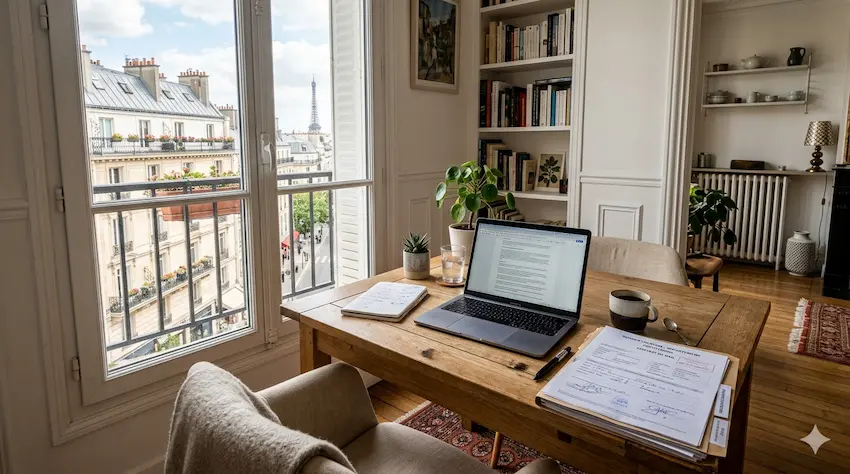
For most newcomers, finding housing is the biggest challenge when moving to France.
In major cities—especially Paris—the rental market is extremely competitive. Landlords often receive dozens of applications for a single apartment, which means preparation is essential.
Understanding the French Rental Market
Unlike in many countries, landlords in France require a detailed application package before agreeing to rent an apartment. This package is called a “dossier de location.”
According to housing guidelines published on Service-Public.fr, landlords are legally allowed to request several documents from potential tenants.
These typically include:
- Passport or national ID
- Valid visa or residence permit
- Employment contract
- Recent payslips (usually the last three months)
- Bank statements
In most cases, landlords expect tenants to earn at least three times the monthly rent.
For example:
If rent is €1,000 per month, the tenant should ideally earn around €3,000 per month.
This rule can make renting difficult for new arrivals who have not yet started their job in France.
The Guarantor Requirement
Another common requirement is a guarantor (garant). This is a person or organization that agrees to pay the rent if the tenant cannot.
Many expats do not have a guarantor in France, which can make applications harder.
Fortunately, there are solutions available.
One option is Visale, a government-backed rental guarantee program supported by Action Logement.
Visale can act as a guarantor for eligible tenants, including young professionals and some international workers.
Private guarantor services also exist, such as Garantme, which offer similar guarantees for a monthly fee.
Always Check the Energy Rating (DPE)
Before signing a rental contract, it is very important to check the apartment’s energy performance rating, known as the DPE (Diagnostic de Performance Énergétique).
Older buildings with poor insulation can result in extremely high heating bills during winter.
This information is required by law and must appear in property listings.
According to housing regulations explained on Service-Public.fr, properties with very poor energy ratings are gradually being restricted from the rental market.
From personal experience, choosing a slightly more expensive apartment with better insulation can often save hundreds of euros per year in energy costs.
Healthcare for Expat Life in France
France consistently ranks among the countries with the best healthcare systems in the world. The system combines universal public coverage with optional private insurance, allowing residents to access high-quality medical care at relatively affordable costs.
According to data published by Organisation for Economic Co-operation and Development and INSEE, France maintains one of the highest healthcare accessibility rates in Europe.
For expats, understanding how the healthcare system works is essential because medical coverage is not automatic on arrival.
Protection Universelle Maladie (PUMA)
France’s public healthcare system operates under a program called Protection Universelle Maladie (PUMA).
This program allows legal residents to access healthcare coverage after living in France for approximately three months.
The official rules for eligibility and registration are explained on the French government portal Service-Public.fr.
Once approved, residents receive a social security number and can access reimbursements for medical expenses.
The Carte Vitale
One of the most important documents in the French healthcare system is the Carte Vitale.
The Carte Vitale is a small green health insurance card that stores your social security information and allows doctors and pharmacies to process reimbursements automatically.
The card is issued by the national health insurance system managed through Ameli.
Typical reimbursement levels include:
- General doctor consultation: around 70% reimbursement
- Specialist visits: partially reimbursed
- Hospital care: higher reimbursement rates
- The reimbursement is usually transferred directly to your bank account within a few days.
Why Most Residents Have a Mutuelle
Although public healthcare covers a large portion of medical costs, it does not pay for everything.
For this reason, most residents in France purchase complementary health insurance known as a mutuelle.
A mutuelle covers the remaining costs that the public system does not reimburse, including:
- Dental treatments
- Prescription medications
- Glasses and eye care
- Specialist consultations
Many employers provide mutuelle insurance as part of their employee benefits package. In fact, French labor laws require most companies to contribute to employee health insurance.
When I first arrived in France, before receiving my permanent social security number, I temporarily used international health insurance from Allianz to ensure medical coverage during the first months.
Booking Doctor Appointments
Finding doctors in France has become much easier thanks to digital platforms.
The most widely used platform is Doctolib.
This service allows users to:
- Search for nearby doctors and specialists
- View available appointment times
- Book consultations online
- Manage prescriptions and follow-up appointments
Today, millions of patients across France use Doctolib to schedule medical visits.
Opening a Bank Account in France
Opening a French bank account is one of the first administrative steps every expat must complete. Without a bank account, it is difficult to manage everyday financial tasks in France.
You will typically need a bank account to:
- Receive your salary
- Pay rent
- Set up electricity and internet contracts
- Subscribe to mobile phone plans
- Receive government reimbursements such as healthcare refunds
The most important banking document in France is called a RIB (Relevé d’Identité Bancaire). This document contains your bank account details and is frequently requested when setting up payments.
Traditional French Banks
France has several major traditional banks that offer full financial services.
The most well-known institutions include:
- BNP Paribas
- Société Générale
- Crédit Agricole
Advantages of traditional banks include:
- Access to in-person customer service
- Mortgage and loan options
- Comprehensive financial services
However, opening an account can sometimes involve significant paperwork and several appointments.
Banks usually request:
- Passport or ID
- Proof of address in France
- Residence permit or visa
- Employment contract or income proof
According to consumer banking information published by Banque de France, anyone legally residing in France has the right to a bank account through a procedure known as droit au compte.
Digital Banks Popular Among Expats
Many expats prefer starting with digital banking platforms because they are easier to open and often support multiple currencies.
Popular options include:
- Wise
- Revolut
- N26
Advantages include:
- Fast account setup
- International money transfers
- Multi-currency accounts
- Lower foreign exchange fees
During my relocation to France, I personally used Wise to transfer money internationally. It helped me avoid the 3–4% currency markup that traditional banks often charge on international transfers.
Many expats use digital banks initially and later open a traditional French bank account once they have permanent residency and employment.
Transportation Tips for Expat Life
France has one of the most advanced transportation systems in Europe. Whether traveling inside a city or across the country, residents have access to efficient and reliable public transport networks.
The transportation system includes:
- Metro systems in major cities
- Regional trains
- High-speed rail networks
- Buses and trams
- Bicycle infrastructure
Public Transport in Paris
In Paris, public transportation is the primary way most residents commute.
The system includes:
- Metro lines
- Buses
- RER regional trains
- Trams
All of these networks are managed by Île-de-France Mobilités.
The most common travel pass is the Navigo Pass, which allows unlimited travel across all zones.
In 2026, the monthly Navigo pass costs roughly almost €90 and provides access to:
- Metro
- Buses
- RER trains
- Trams
- Airport connections
For many expats, the Navigo pass becomes one of the most essential items for daily life in Paris.
High-Speed Rail: The TGV Network
France is also famous for its high-speed train network known as the TGV (Train à Grande Vitesse).
The system connects major cities across the country, allowing residents to travel quickly between regions.
For example:
- Paris → Lyon: about 2 hours
- Paris → Bordeaux: about 2 hours
- Paris → Marseille: about 3 hours
Tickets can be purchased through the official railway platform SNCF Connect.
Booking tickets several weeks in advance can often reduce prices by 50–60%.
Cost of Living for Expat Life in France (2026)
The cost of living in France varies significantly depending on the city, lifestyle, and housing situation. While the country is known for a high standard of living, many regional cities remain relatively affordable compared to other major Western European destinations.
According to economic data published by INSEE, housing remains the largest expense for most households in France.
Below is a realistic overview of typical monthly expenses expats may encounter in 2026.
Housing Costs
Housing usually represents the largest monthly expense for expats.
Typical rent ranges depend heavily on the location.
In major cities like Paris:
- Studio apartment: approximately €900 – €1,400 per month
- One-bedroom apartment: approximately €1,300 – €2,600 per month
In large regional cities such as Lyon or Toulouse:
- One-bedroom apartments typically cost between €700 and €1,300
In smaller towns across France:
- One-bedroom apartments often range between €450 and €850
Utilities such as electricity, heating, water, and internet can add an additional €80 to €180 per month, depending on the building and energy efficiency.
Food and Groceries
Food costs in France can vary depending on lifestyle choices.
Buying groceries from supermarkets is generally affordable, while dining out regularly can increase monthly expenses.
Common grocery stores include:
- Carrefour
- Lidl
- Monoprix
Typical monthly grocery spending for one person:
- Budget lifestyle: €200 – €300
- Comfortable lifestyle: €350 – €500
Eating at restaurants is part of French culture, but prices vary widely.
Typical restaurant costs include:
- Casual lunch menu: €12 – €18
- Dinner at a mid-range restaurant: €20 – €35
Transportation Costs
Public transportation is relatively affordable compared to many other major cities.
In the Paris region, the most common transport pass is the Navigo pass, managed by Île-de-France Mobilités.
The monthly cost in 2026 is around €90, allowing unlimited travel across metro, bus, tram, and regional trains.
In other cities such as Lyon or Toulouse, monthly transportation passes usually cost between €50 and €70.
Healthcare Costs
Thanks to France’s public healthcare system, medical expenses are generally manageable for residents.
Once registered with the public health system through Ameli, most doctor visits are partially reimbursed.
Typical costs include:
- General doctor consultation: €25
- Reimbursement from public insurance: about 70%
With a complementary insurance plan (mutuelle), most remaining costs can also be covered.
Estimated Monthly Budget
For a single expat living in France, typical monthly expenses may include:
Budget lifestyle:
- €1,200 – €1,600 outside Paris
Comfortable lifestyle:
- €1,800 – €2,500 depending on city
In Paris, total monthly expenses can easily reach €2,500 – €3,500 depending on housing costs.
Essential Apps That Make Life Easier in France
When moving to a new country, digital tools can simplify many aspects of daily life. Fortunately, France has a wide range of apps that help residents manage transportation, healthcare, banking, and language learning.
Here are some of the most useful apps for expats.
Healthcare Appointments
One of the most widely used healthcare platforms is Doctolib.
This app allows users to:
- Search for nearby doctors and specialists
- Book medical appointments online
- Receive reminders for upcoming consultations
Millions of patients across France use Doctolib to schedule doctor visits quickly.
Public Transportation Navigation
For navigating public transportation systems in major cities, many expats rely on Citymapper.
Citymapper provides real-time information for:
- Metro routes
- Bus schedules
- Walking directions
- Bike-sharing services
It is particularly helpful in large cities like Paris where multiple transportation networks intersect.
International Money Transfers
Expats frequently need to transfer money between countries. One of the most popular solutions is Wise.
Wise offers several advantages:
- Low international transfer fees
- Transparent exchange rates
- Multi-currency accounts
Many expats use Wise when sending money to family abroad or managing income from multiple countries.
Language Learning
Although English is common in international workplaces, learning French significantly improves daily life.
A helpful tool for beginners is Babbel.
- Apps like Babbel help expats:
- Learn practical vocabulary
- Practice pronunciation
Build confidence in everyday conversations
Even basic French phrases can make interactions with landlords, government offices, and local shops much smoother.
Taxes in France: What Expats Need to Understand
France is known for its relatively high taxes, but the system also funds strong public services such as healthcare, education, and infrastructure.
For expats, understanding the tax system is important because tax residency rules determine how income is reported.
Guidelines about taxation are explained on the official French government website Service-Public.fr and the national tax portal Direction Générale des Finances Publiques.
When Do You Become a Tax Resident?
You are generally considered a tax resident in France if one of the following conditions applies:
- Your primary home is in France
- You spend more than 183 days per year in France
- Your main professional activity is located in France
Once classified as a tax resident, you must declare your worldwide income to the French tax authorities.
Income Tax in France
France uses a progressive income tax system, meaning the tax rate increases as income rises.
Income tax is declared annually through the online tax portal operated by Direction Générale des Finances Publiques.
Expats usually need to file their first tax declaration during the year following their arrival.
Social Contributions
In addition to income tax, residents may also pay social contributions that support the French welfare system.
These contributions help fund:
- Healthcare
- Retirement pensions
- Unemployment benefits
Although tax rates can appear high, these contributions also provide access to some of the strongest social protections in Europe.
Cultural Integration for Expat Life in France
Moving to a new country involves more than paperwork and housing. Successfully settling in France also requires understanding local culture and social expectations.
French culture places a strong emphasis on politeness, communication style, and respect for social norms. For many expats, learning these cultural details makes daily life much easier.
Learn Basic French
Although English is widely spoken in international environments, especially in Paris, learning basic French significantly improves daily interactions.
Simple phrases such as greetings and polite expressions are highly valued.
Examples include:
- Bonjour (Hello)
- Merci (Thank you)
- Excusez-moi (Excuse me)
According to language integration programs supported by OFII, learning French helps immigrants integrate more successfully into society and the workplace.
Even basic language skills can make interactions with landlords, government offices, and local businesses smoother.
Understand French Social Etiquette
France has certain social customs that newcomers should be aware of.
For example:
- Always greet people with Bonjour when entering a shop or office.
- Saying Merci, bonne journée when leaving is considered polite.
- Direct communication is common in professional settings.
These small cultural habits can significantly improve everyday interactions.
Embrace the French Lifestyle
One of the most enjoyable parts of living in France is adapting to its lifestyle.
Daily life often emphasizes:
- Long meals with friends or family
- Quality food and fresh ingredients
- Work-life balance
Many expats eventually discover that slowing down and enjoying these everyday moments is one of the most rewarding aspects of life in France.
Common Mistakes in Expat Life in France
Relocating to France can be exciting, but many newcomers encounter avoidable challenges during their first year.
Being aware of common mistakes can make the transition much smoother.
Not Preparing a Rental Dossier
Housing competition in major cities can be intense.
Many landlords expect applicants to submit a complete rental dossier immediately when applying for an apartment. Without prepared documents, expats often lose opportunities to other applicants.
Housing requirements are explained on the official government portal Service-Public.fr.
Preparing documents in advance can significantly increase your chances of securing an apartment.
Delaying Healthcare Registration
Some expats wait too long before applying for public healthcare coverage.
Registering with the French healthcare system through Ameli should be done as soon as you become eligible.
Without registration, medical reimbursements may be delayed.
Underestimating Bureaucracy
France is well known for its administrative procedures.
Tasks such as:
- Residence permit applications
- Tax registration
- Healthcare enrollment
can take several weeks or months to complete.
Patience and proper documentation are essential when dealing with French administration.
Not Learning Basic French
Although it is possible to live in France using English, especially in international environments, learning basic French can significantly improve your experience.
It helps with:
- Administrative procedures
- Social interactions
- Job opportunities
- Even a modest effort to learn the language is usually appreciated by locals.
Moving to France Checklist
Preparing early can make relocation much easier.
Below is a practical timeline many expats follow when moving to France.
Three to Six Months Before Moving
Start preparing the essential foundations for relocation.
Important steps include:
- Research visa and residency requirements
- Organize financial documents
- Begin learning basic French
- Research housing markets in different cities
Official visa information is available through France Visas.
One to Two Months Before Arrival
As the moving date approaches, focus on practical arrangements.
Recommended actions include:
- Search for temporary accommodation
- Prepare your rental dossier
- Open a digital bank account
- Arrange health insurance coverage for the first months
Many expats use digital banking services such as Wise during this transition period.
After Arriving in France
Once you arrive, several administrative tasks must be completed.
These usually include:
- Registering for healthcare coverage
- Opening a local bank account
- Setting up electricity and internet services
- Registering with tax authorities
Completing these steps early helps establish financial and legal stability in France.
Conclusion
Living in France as an expat in 2026 can be an incredibly rewarding experience.
While the country’s administrative processes can initially feel complicated, most newcomers gradually learn how the system works. Over time, everyday life becomes much easier as routines develop and familiarity with French institutions grows.
Beyond the paperwork and logistics, what truly makes France special is its lifestyle. Morning coffee at a neighborhood café, fresh bread from a local bakery, and long dinners with friends are small experiences that define daily life.
With proper preparation, patience, and an open mind, France can become much more than a destination—it can become home.
Frequently Asked Questions
- Is English enough to live in France?
In international cities like Paris, many professionals work in English. However, learning French greatly improves daily life and administrative interactions.
- Is it difficult to rent an apartment in France?
Yes, especially in large cities. Preparing a complete rental dossier significantly increases your chances of securing housing.
- Can foreigners access the French healthcare system?
Yes. Once residents meet eligibility requirements under the public system managed by Ameli, they can receive healthcare reimbursements.
- Is France expensive to live in?
Costs vary widely depending on location. Paris is one of the most expensive cities, while many regional cities offer a more affordable lifestyle.
Disclaimer: This article is for informational purposes only. Laws, procedures, and regulations may change over time. Readers should always consult official government sources such as Service-Public.fr for the most accurate and up-to-date information.