
Table of Contents
A complete guide for expats to find and rent apartments in France
Introduction
Finding an apartment in France can feel like both an exciting adventure and a stressful challenge for expats. From the charm of a Parisian studio to the sunny, spacious flats in Toulouse, housing options vary widely—but so do the rules, paperwork, and expectations.
Having lived in Paris for several years, I’ve seen expats struggle to get their first apartment approved, spend weeks chasing landlords, or pay unexpected bills due to poor energy ratings.
In smaller cities like Compiègne, I personally experienced that:
- a basic studio starts around €600/month
- shared apartments (colocation) start around €400/month per person
This makes shared housing an excellent option for newcomers on a budget.
By the end of this guide, you will know how to:
- Choose the right city and neighborhood
- Prepare a strong rental dossier
- Understand guarantor requirements
- Use digital tools to simplify your apartment search
- Avoid common mistakes many expats make
Understanding the French Rental System
Before you start searching for apartments, it is essential to understand how the French rental system works.
Key Rental Terms
Loyer
The monthly rent for the apartment.
Charges comprises (CC)
Rent that includes additional charges such as water, heating, and building maintenance.
Caution
The security deposit paid before moving in. Usually 1–2 months’ rent.
DPE Rating (Diagnostic de Performance Énergétique)
The energy efficiency rating of a property. Poor ratings can lead to very high heating costs.
Many large cities in France are classified as Zones Tendues, meaning housing demand is extremely high. This is especially true in:
- Paris
- Lyon
- Bordeaux
Pro Tip:
Never focus only on the base rent. Always check the charges and the DPE energy rating.
Step-by-Step Finding an apartment in France
Finding the right apartment in France much easier if you follow a structured process.
Step 1: Decide Your City, Neighborhood, and Budget
Start by asking yourself a few important questions:
- Do I want to live in the city center or suburbs?
- What is the maximum rent I can afford each month?
- How important are public transport, schools, and supermarkets?
Average Rent in 2026 (1-Bedroom Apartment)
Paris
- €1,300 – €2,600
- Very competitive rental market
Lyon
- €800 – €1,300
- Cultural and food capital
Toulouse
- €700 – €1,200
- Relaxed lifestyle with warm weather
Bordeaux
- €750 – €1,400
- Growing city with modern transport
Compiègne
- Studio: around €600
- Shared room: from €350
Personal Tip:
Shared apartments (colocation) are a great way to:
- save money
- meet new people
- adapt faster to French life
However, always review:
- house rules
- cleanliness standards
- rental contracts
Step 2: Use Rental Platforms and Apps
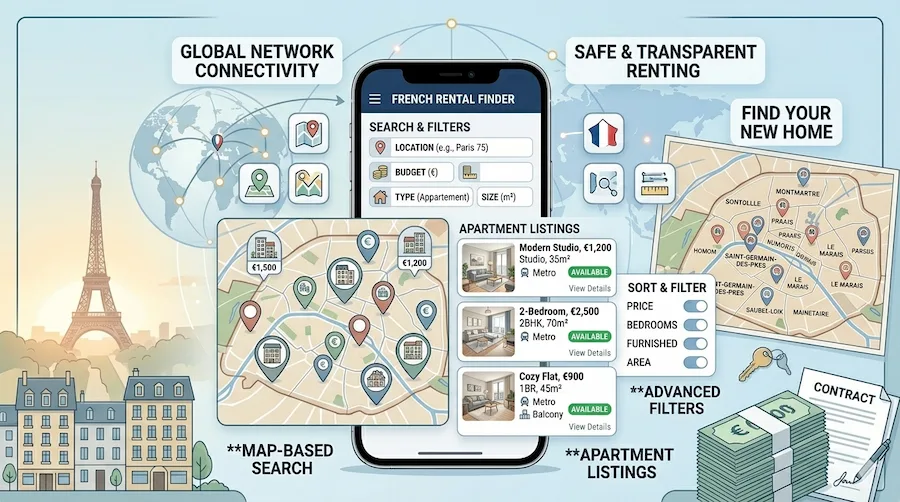
Digital platforms for finding an apartment in France make the search much faster and more efficient.
Popular rental websites in France include:
SeLoger
One of the most widely used rental platforms for finding an apartment in France.
PAP (Particulier à Particulier)
Allows renters to deal directly with property owners, often avoiding agency fees.
Bien’ici
A modern property platform with map-based searches and 3D virtual tours.
Airbnb Long-Term Rentals
Useful for temporary accommodation while searching for permanent housing.
Step 3: Visit Apartments and Inspect the Property
Before signing anything, carefully evaluate the apartment.
Check the following:
- Heating system
- Water pressure
- Insulation
- Noise levels
- Building security
Also inspect:
- locks and door security
- intercom systems
- building entrance access
Older apartments, especially in Paris, often have beautiful architecture but very small kitchens or bathrooms.
Pro Tip:
Always visit apartments during daylight so you can spot problems like mold or damp walls.
Step 4: Prepare a Strong Rental Dossie
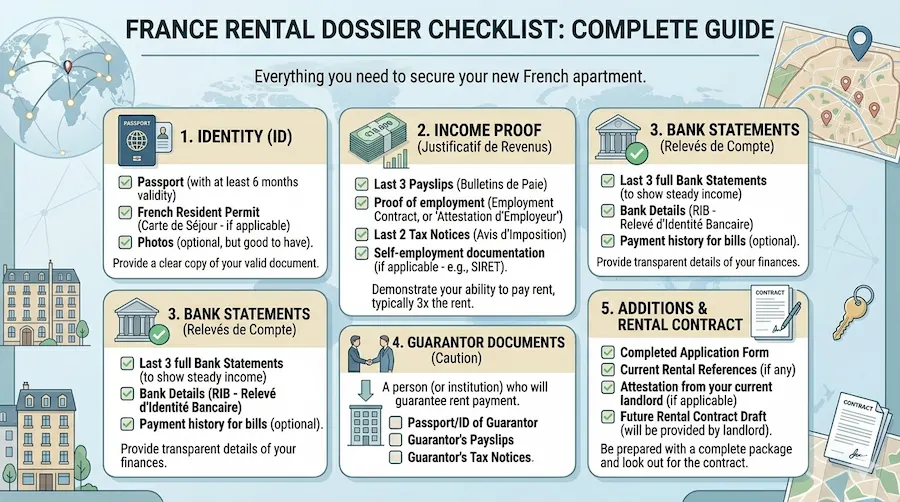
In France, your rental dossier is the most important factor in getting approved. Finding an apartment in France is very easy if your rental dossier is strong.
Most landlords will request the following documents:
- Passport or ID
- Visa or residence permit
- Employment contract
- Last three payslips
- Bank statements
Guarantor Requirement
Many landlords also require a French guarantor who agrees to cover rent if you cannot pay.
If you do not have a guarantor, you can use services such as:
- Visale (government-backed)
- Garantme (private guarantor service)
These services help many expats get approved faster when finding an apartment in France.
Step 5: Sign the Lease and Set Up Utilities
After finding an apartment in France once your application is approved, the final step is signing the lease.
Before signing:
- Review the lease terms carefully
- Confirm included charges
- Check notice periods and lease duration
After moving in, you must set up:
- electricity
- gas
- water
- internet
In France, renter’s insurance (assurance habitation) is mandatory.
Pro Tip:
Some landlords require proof of insurance before handing over the keys.
Helpful Tips for Expats
Learning a few basic French phrases can help a lot when dealing with landlords.
Examples:
- Bonjour
- Merci
- Je voudrais visiter l’appartement
Also remember to:
- research neighborhood amenities
- check public transport access
- ask about heating costs
In some cases, you may even be able to negotiate the rent, especially for long-term leases.
Common Mistakes to Avoid
Many expats face problems during their apartment search due to simple mistakes.
1. Incomplete rental dossier
The most common reason for application rejection.
2. Ignoring energy ratings
Poor insulation can lead to very expensive heating bills.
3. Not researching the neighborhood
Access to supermarkets, transport, and services matters daily.
4. Waiting too long to apply
Apartments in high-demand areas can be rented within hours.
Digital Tools for Apartment Hunting
Several digital tools can help simplify the apartment search process.
Useful platforms include:
- SeLoger
- PAP
- Bien’ici
- Visale
- Garantme
These services help with:
- apartment listings
- guarantor support
- property search automation
Cost Overview
When planning your budget, remember that rent is only part of the total cost.
Additional expenses may include:
- deposits
- insurance
- building charges
- utilities
Pro Tip:
Budget 10–20% more than the advertised rent to cover additional expenses.
Conclusion
Finding an apartment in France requires preparation, patience, and the right tools.
By following this guide, you will understand:
- how to prepare a strong rental dossier
- how to use digital rental platforms
- how guarantor services work
- how to avoid common rental mistakes
With the right approach, apartment hunting becomes the first exciting step toward building your new life in France.
Imagine enjoying your first coffee in a sunny Compiègne studio or settling into a lively shared apartment in Paris—proper preparation makes that dream possible. I hope the process of finding an apartment in France for the first time becomes faster and easier.
Do I need a French guarantor?
Most landlords require one. If you don’t have a guarantor, services like Visale or Garantme can help.
Can I rent without speaking French?
Yes. Many platforms and landlords accommodate English speakers, especially in major cities. However, learning basic French is helpful.
How long does it take to find an apartment?
In high-demand cities like Paris, apartments may be rented within hours. In smaller towns, the process can take longer.
Do I need to pay deposit and utilities upfront?
Typically, you must pay:
- one month’s security deposit
- the first month’s rent
Utilities are usually set up afterward.
Disclaimer: This article is for informational purposes only. Rental laws, costs, and procedures may change. Always verify details through official sources such as Service-Public.fr and individual rental platform policies before signing any agreements.